Cells, tissues, organs, systems and organism
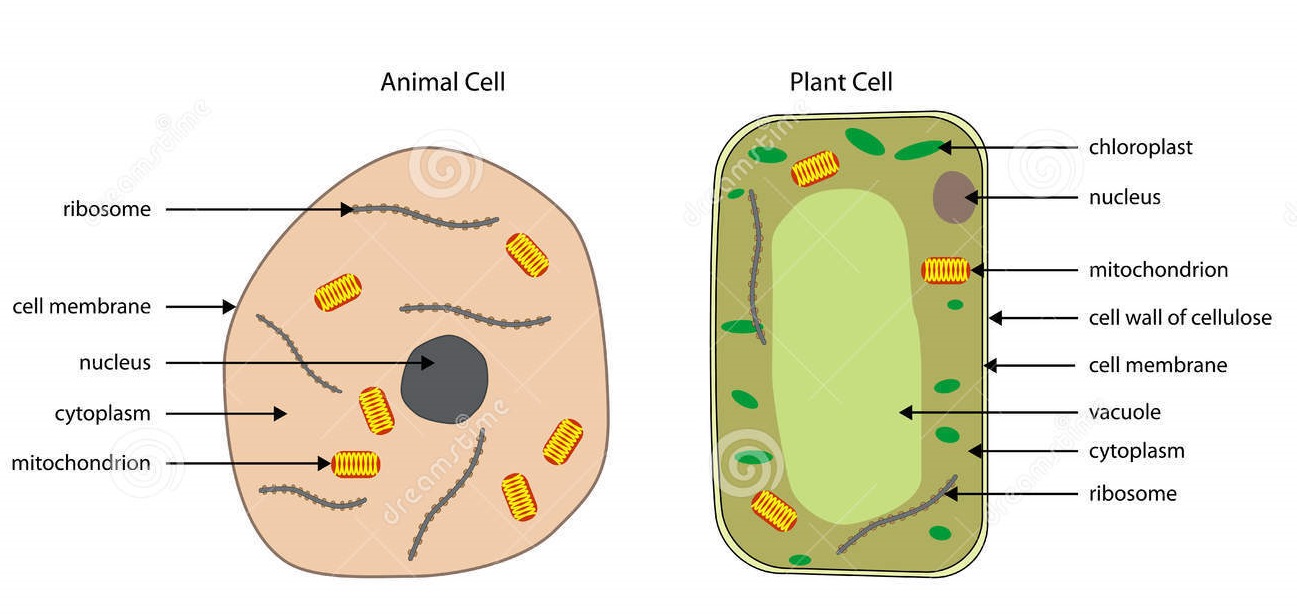
Cells are the building blocks of life. All living organisms are made up of one or more cells.
Unicellular organisms, like amoebas and bacteria, consist of only a single cell. Multicellular organisms, like people and elephants, are made up of many, many
cells. Human beings, for example, are made up of over 30 trillion cells.
There are numerous different types of cells, each of which has specialised to perform a specific tasks. Red blood cells have specialised to be able to travel
through small blood vessels carrying oxygen to the cells of the bodym, muscle cells have specialised to be able to contract and relax, and neurones have
specialised to be able to carry an electrical impulse from one point in the body to another like from the fingers to the brain.
An individual cell would on its own be of little use in sustaining an organism as large as a human. A single cell is so small that it would even be of little
use to a small mouse. Cells of the same type (with the same specialisation) combine to form tissues. Neurones are bundled together to form nerves and muscle cells
bind together to form a muscle. A tissue is a group of similar cells working together to perform a specific task.
While tissues are more useful to an organism than a single cell, they are still not able to carry out the complex processes that are required to
sustain multicellular organisms so they combine to form organs. Organs are structures that are made up of two or more tissues that work together to serve
a particular function. The heart is an organ that keeps blood circulating around the body and is made up of several tissues including muscle, fat, connective,
and nerve tissue.
Organs are structures made up of two or more tissues organized to carry out a particular function, and groups of organs with related functions make up the
different organ systems.
At each level of organization—cells, tissues, organs, and organ systems—structure is closely related to function. For instance, the cells in the small intestine that absorb nutrients look very different from the muscle cells needed for body movement.
Complex multicellular organisms are made up of systems of organs working together.
Cells make up tissues, tissues make up organs, organs make up organ systems, and organ systems make up an organism.
The function of an organ system depends on the integrated activity of its organs. For instance, digestive system organs cooperate to process food.
The survival of the organism depends on the integrated activity of all the organ systems, often coordinated by the endocrine and nervous systems.
Introduction
If you were a single-celled organism and you lived in a nutrient-rich place, staying alive would be pretty straightforward. For instance, if you were an amoeba
living in a pond, you could absorb nutrients straight from your environment. The oxygen you would need for metabolism could diffuse in across your cell membrane,
and carbon dioxide and other wastes could diffuse out. When the time came to reproduce, you could just divide yourself in two!
However, odds are you are not an amoeba—given that you're using Khan Academy right now—and things aren’t quite so simple for big, many-celled organisms like
human beings. Your complex body has over 30 trillion cells, and most of those cells aren’t in direct contact with the external environment.^1
?1
?? start superscript, 1, end superscript A cell deep inside your body—in one of your bones, say, or in your liver—can’t get the nutrients or oxygen it needs directly from the environment.
How, then, does the body nourish its cells and keep itself running? Let's take a closer look at how the organization of your amazing body makes this possible.
Multicellular organisms need specialized systems
Most cells in large multicellular organisms don't directly exchange substances like nutrients and wastes with the external environment, instead, they are surrounded by an internal environment of extracellular fluid—literally, fluid outside of
cells. The cells get oxygen and nutrients from this extracellular fluid and release waste products into it. Humans and other complex organisms have specialized
systems that maintain the internal environment, keeping it steady and able to provide for the needs of the cells.
Different systems of the body carry out different functions. For example, your digestive system is responsible for taking in and processing food, while your
respiratory system—working with your circulatory system—is responsible for taking up oxygen and getting rid of carbon dioxide. The muscular and skeletal systems
are crucial for movement; the reproductive system handles reproduction; and the excretory system gets rid of metabolic waste.
Because of their specialization, these different systems are dependent on each other. The cells that make up the digestive, muscular, skeletal, reproductive, and
excretory systems all need oxygen from the respiratory system to function, and the cells of the respiratory system—as well as all the other systems—need nutrients
and must get rid of metabolic wastes. All the systems of the body work together to keep an organism up and running.
Overview of body organization
All living organisms are made up of one or more cells. Unicellular organisms, like amoebas, consist of only a single cell. Multicellular organisms, like people, are
made up of many cells. Cells are considered the fundamental units of life.
The cells in complex multicellular organisms like people are organized into tissues, groups of similar cells that work together on a specific task.
Organs are structures made up of two or more tissues organized to carry out a particular function, and groups of organs with related functions make up the
different organ systems.
From left to right: single muscle cell, multiple muscle cells together forming muscle tissue, organ made up of muscle tissue (bladder, and organ system made up of kidneys, ureter, bladder and urethra.
Image credit: modified from Levels of structural organization of the human body by OpenStax College, Anatomy & Physiology, CC BY 4.0
At each level of organization—cells, tissues, organs, and organ systems—structure is closely related to function. For instance, the cells in the small intestine that absorb nutrients look very different from the muscle cells needed for body movement. The structure of the heart reflects its job of pumping blood throughout the body, while the structure of the lungs maximizes the efficiency with which they can take up oxygen and release carbon dioxide.
Types of tissues
As we saw above, every organ is made up of two or more tissues, groups of similar cells that work together to perform a specific task. Humans—and other large multicellular animals—are made up of four basic tissue types: epithelial tissue, connective tissue, muscle tissue, and nervous tissue.
The four types of tissues are exemplified in nervous tissue, stratified squamous epithelial tissue, cardiac muscle tissue, and connective tissue in small intestine.
Image credit: modified from Types of tissues: Figure 1 by OpenStax College, Anatomy & Physiology, CC BY 3.0
Epithelial tissue
Epithelial tissue consists of tightly packed sheets of cells that cover surfaces—including the outside of the body—and line body cavities. For instance, the outer layer of your skin is an epithelial tissue, and so is the lining of your small intestine.
Epithelial cells are polarized, meaning that they have a top and a bottom side. The apical, top, side of an epithelial cell faces the inside of a cavity or the outside of a structure and is usually exposed to fluid or air. The basal, bottom, side faces the underlying cells. For instance, the apical sides of intestinal cells have finger-like structures that increase surface area for absorbing nutrients.
Image showing three cells lining the small intestine. Each cell contains a nucleus and is surrounded by a plasma membrane. The tops of the cells have microvilli that face the cavity from which substances will be absorbed.
Image credit: Eukaryotic cells: Figure 3 by OpenStax College, Biology, CC BY 3.0
Epithelial cells are tightly packed, and this lets them act as barriers to the movement of fluids and potentially harmful microbes. Often, the cells are joined by specialized junctions that hold them tightly together to reduce leaks.
Connective tissue
Connective tissue consists of cells suspended in an extracellular matrix. In most cases, the matrix is made up of protein fibers like collagen and fibrin in a solid, liquid, or jellylike ground substance. Connective tissue supports and, as the name suggests, connects other tissues.
Loose connective tissue, show below, is the most common type of connective tissue. It's found throughout your body, and it supports organs and blood vessels and links epithelial tissues to the muscles underneath. Dense, or fibrous, connective tissue is found in tendons and ligaments, which connect muscles to bones and bones to each other, respectively.
Loose connective tissue is composed of loosely woven collagen and elastic fibers. The fibers and other components of the connective tissue matrix are secreted by fibroblasts.
Image credit: Animal primary tissues: Figure 6 by OpenStax College, Biology, CC BY 4.0
Specialized forms of connective tissue include adipose tissue—body fat—bone, cartilage, and blood, in which the extracellular matrix is a liquid called plasma.
Muscle tissue
Muscle tissue is essential for keeping the body upright, allowing it to move, and even pumping blood and pushing food through the digestive tract.
Muscle cells, often called muscle fibers, contain the proteins actin and myosin, which allow them to contract. There are three main types of muscle: skeletal muscle, cardiac muscle, and smooth muscle.
From left to right. Smooth muscle cells, skeletal muscle cells, and cardiac muscle cells. Smooth muscle cells do not have striations, while skeletal muscle cells do. Cardiac muscle cells have striations, but, unlike the multinucleate skeletal cells, they have only one nucleus. Cardiac muscle tissue also has intercalated discs, specialized regions running along the plasma membrane that join adjacent cardiac muscle cells and assist in passing an electrical impulse from cell to cell.
Image credit: Animal primary tissues: Figure 12 by OpenStax College, Biology, CC BY 4.0
Skeletal muscle, which is also called striated—striped—muscle, is what we refer to as muscle in everyday life. Skeletal muscle is attached to bones by tendons, and it allows you to consciously control your movements. For instance, the quads in your legs or biceps in your arms are skeletal muscle.
Cardiac muscle is found only in the walls of the heart. Like skeletal muscle, cardiac muscle is striated, or striped. But it's not under voluntary control, so—thankfully!—you don’t need to think about making your heart beat. The individual fibers are connected by structures called intercalated disks, which allow them to contract in sync.
Smooth muscle is found in the walls of blood vessels, as well as in the walls of the digestive tract, the uterus, the urinary bladder, and various other internal structures. Smooth muscle is not striped, striated, and it's involuntary, not under conscious control. That means you don't have to think about moving food through your digestive tract!
Nervous tissue
Nervous tissue is involved in sensing stimuli—external or internal cues—and processing and transmitting information. It consists of two main types of cells: neurons, or nerve cells, and glia.
The neurons are the basic functional unit of the nervous system. They generate electrical signals called conducted nerve impulses or action potentials that allow the neurons to convey information very rapidly across long distances. The glia mainly act to support neuronal function.
Picture of neuron. The neuron has projections called dendrites that receive signals and projections called axons that send signals. Also shown are two types of glial cells: astrocytes regulate the chemical environment of the nerve cell, and oligodendrocytes insulate the axon so the electrical nerve impulse is transferred more efficiently.
Image credit: Animal primary tissues: Figure 13 by OpenStax College, Biology, CC BY 4.0
Organs
Organs, such as the heart, the lungs, the stomach, the kidneys, the skin, and the liver, are made up of two or more types of tissue organized to serve a particular function. For example, the heart pumps blood, the lungs bring in oxygen and eliminate carbon dioxide, and the skin provides a barrier to protect internal structures from the external environment.
Most organs contain all four tissue types. The layered walls of the small intestine provide a good example of how tissues form an organ. The inside of the intestine is lined by epithelial cells, some of which secrete hormones or digestive enzymes and others of which absorb nutrients. Around the epithelial layer are layers of connective tissue and smooth muscle, interspersed with glands, blood vessels, and neurons. The smooth muscle contracts to move food through the gut, under control of its associated networks of neurons.^2
?2
?? start superscript, 2, end superscript
Cross-section of the GI tract. From outside to inside: Blood vessels, networks of nerves in smooth muscle layers, connective tissue, more smooth muscle, another layer of connective tissue, epithelial tissue, and empty space in the middle as the path of digested food.
Image credit: modified from Layers of the GI tract by Goran tek-en, [CC BY-SA 3.0](https://creativecommons.org/licenses/by-sa/3.0/deed.en; the modified image is licensed under a CC BY-SA 3.0 license
Organ systems
Organs are grouped into organ systems, in which they work together to carry out a particular function for the organism.
For example, the heart and the blood vessels make up the cardiovascular system. They work together to circulate the blood, bringing oxygen and nutrients to cells throughout the body and carrying away carbon dioxide and metabolic wastes. Another example is the respiratory system, which brings oxygen into the body and gets rid of carbon dioxide. It includes the nose, mouth, pharynx, larynx, trachea, and lungs.
Two diagrams. On the left, a diagram of the respiratory system showing nasal passages, trachea, and lungs. On the right, a diagram of the circulatory system showing heart and blood vessels.
Image credit: Structural organization of the human body: Figures 2 and 3 by OpenStax College, Anatomy & Physiology, CC BY 4.0
Major organ systems of the human body
Organ system Function Organs, tissues, and structures involved
Cardiovascular Transports oxygen, nutrients, and other substances to the cells and transports wastes, carbon dioxide, and other substances away from the cells; it can also help stabilize body temperature and pH Heart, blood, and blood vessels
Lymphatic Defends against infection and disease and transfers lymph between tissues and the blood stream Lymph, lymph nodes, and lymph vessels
Digestive Processes foods and absorbs nutrients, minerals, vitamins, and water Mouth, salivary glands, esophagus, stomach, liver, gallbladder, exocrine pancreas, small intestine, and large intestine
Endocrine Provides communication within the body via hormones and directs long-term change in other organ systems to maintain homeostasis Pituitary, pineal, thyroid, parathyroids, endocrine pancreas, adrenals, testes, and ovaries.
Integumentary Provides protection from injury and fluid loss and provides physical defense against infection by microorganisms; involved in temperature control Skin, hair, and nails
Muscular Provides movement, support, and heat production Skeletal, cardiac, and smooth muscles
Nervous Collects, transfers, and processes information and directs short-term change in other organ systems Brain, spinal cord, nerves, and sensory organs—eyes, ears, tongue, skin, and nose
Reproductive Produces gametes—sex cells—and sex hormones; ultimately produces offspring Fallopian tubes, uterus, vagina, ovaries, mammary glands (female), testes, vas deferens, seminal vesicles, prostate, and penis (male)
Respiratory Delivers air to sites where gas exchange can occur Mouth, nose, pharynx, larynx, trachea, bronchi, lungs, and diaphragm
Skeletal Supports and protects soft tissues of the body; provides movement at joints; produces blood cells; and stores minerals Bones, cartilage, joints, tendons, and ligaments
Urinary Removes excess water, salts, and waste products from the blood and body and controls pH Kidneys, ureters, urinary bladder, and urethra
Immune Defends against microbial pathogens—disease-causing agents—and other diseases Leukocytes, tonsils, adenoids, thymus, and spleen
This table is modified from Major organ systems of the human body by CK-12 Foundation, CC BY-NC 3.0.
Although we often talk about the different organ systems as though they were distinct, parts of one system may play a role in another system. The mouth, for instance, belongs to both the respiratory system and the digestive system.
There's also a lot of functional overlap among the different systems. For instance, while we tend to think of the cardiovascular system as delivering oxygen and nutrients to cells, it also plays a role in maintaining temperature. The blood also transports hormones produced by the glands of the endocrine system, and white blood cells are a key component of the immune system.
Organs in a system work together.
Just like workers on an assembly line, the organs of an organ system must work together for the system to function as a whole. For instance, the function of the digestive system—taking in food, breaking it down into molecules small enough to be absorbed, absorbing it, and eliminating undigested waste products—depends on each successive organ doing its individual job.^{3,4}
?3,4
?? start superscript, 3, comma, 4, end superscript
Digestion is the breakdown of food so that its nutrients can be absorbed. It includes both mechanical digestion and chemical digestion. In mechanical digestion, chunks of food are broken into smaller pieces. In chemical digestion, large molecules like proteins and starches are broken into simpler units that can be readily absorbed.
Mechanical digestion, along with some initial chemical digestion, takes place in the mouth and stomach. Chewing breaks food into smaller pieces, and the stomach churns the food up into a fluid mixture. The stomach also acts as a storage tank, releasing partially digested food into the small intestine at a rate the small intestine can handle.^4
?4
?? start superscript, 4, end superscript
Digestive system. Starts at mouth, which connects to stomach. The liver and pancreas are adjacent to the stomach, which leads to the small intestine and then the large intestine.
Image credit: modified from Digestive systems: Figure 5 by OpenStax College, Biology, CC BY 4.0
The small intestine is the major site of chemical digestion, which is carried out by enzymes released from the pancreas and liver. The small intestine is also the main site of nutrient absorption; molecules like sugars and amino acids are taken up by cells and transported into the bloodstream for use.
The mouth, stomach, small intestine, and other digestive system organs work together to make digesting food and absorbing nutrients efficient. Digestion wouldn’t so work well if your stomach stopped churning or if one of your enzyme-producing glands—like the pancreas—decided to take the day off!
Organ systems work together, too.
Just as the organs in an organ system work together to accomplish their task, so the different organ systems also cooperate to keep the body running.
For example, the respiratory system and the circulatory system work closely together to deliver oxygen to cells and to get rid of the carbon dioxide the cells produce. The circulatory system picks up oxygen in the lungs and drops it off in the tissues, then performs the reverse service for carbon dioxide. The lungs expel the carbon dioxide and bring in new oxygen-containing air. Only when both systems are working together can oxygen and carbon dioxide be successfully exchanged between cells and environment.
There are many other examples of this cooperation in your body. For instance, the blood in your circulatory system has to receive nutrients from your digestive system and undergo filtration in your kidneys, or it wouldn't be able to sustain the cells of your body and remove the wastes they produce.
Control and coordination
Many body functions are controlled by the nervous system and the endocrine system. These two regulatory systems use chemical messengers to affect the function of the other organ systems and to coordinate activity at different locations in the body.
How do the endocrine and nervous systems differ?
In the endocrine system, the chemical messengers are hormones released into the blood.
In the nervous system, the chemical messengers are neurotransmitters sent straight from one cell to another across a tiny gap.
Since hormones have to travel through the bloodstream to their targets, the endocrine system usually coordinates processes on a slower time scale than the nervous system in which messages are delivered directly to the target cell. In some cases, such as the fight-or-flight response to an acute threat, the nervous and endocrine systems work together to produce a response x